
Self Employed Allowable Expenses List UK: What You Can (And Can't) Claim in 2026
If you're self employed in the UK, every legitimate business cost you fail to claim is money left on the table. Whether you're a freelance product developer, an engineering consultant, or a sole trader running a small design studio, understanding your self employed allowable expenses can make a meaningful difference to your tax bill each year.
This guide walks through what counts, what doesn't, and how to claim - with practical examples relevant to the 2025/26 and 2026/27 tax years.
Key Takeaways
- Allowable expenses are business costs you deduct from your income before calculating tax. Claiming allowable expenses reduces your taxable profit, which in turn lowers both your income tax and National Insurance contributions.
- HMRC requires expenses to be "wholly and exclusively" for business use. Costs with mixed personal and business use - like phone bills, broadband, or a car - must be fairly split, and only the business portion is claimable.
- Main categories include travel costs, home office costs, staff costs, bank charges, business insurance, materials, software, professional fees, and marketing and advertising. Capital items like equipment machinery business vehicles are handled separately through capital allowances.
- You can either use the £1,000 trading allowance or claim actual expenses - not both for the same income. Businesses with material ongoing costs almost always benefit more from itemising.
- 3D designers, product developers and engineers working as sole traders can usually claim design software licences, prototyping materials, subcontractor fees, and related running costs as allowable business expenses.
- Keep digital copies of receipts and bank statements for at least five years after the 31 January filing deadline. You need to keep expense records for at least five years in case HMRC asks for evidence.
What Are Self Employed Allowable Expenses in the UK?
Allowable expenses are the everyday costs of running your business that you can subtract from your self employed income before working out how much tax you owe. The core rule is simple: expenses must be incurred wholly and exclusively for business purposes.
HMRC does not publish a single closed "allowable expenses list." Instead, it sets broad categories and rules, and you match your spending to those categories on your self assessment tax return. Think of it as a framework rather than a fixed checklist.
Claiming these business expenses reduces your taxable profit. For example, if your turnover in 2025/26 is £50,000 and you have £12,000 of allowable expenses, your actual profit for tax purposes is £38,000. Your Personal Allowance (£12,570 in 2025/26) then applies to that profit before you pay income tax or Class 4 National Insurance contributions on the remainder.
Costs with both personal and business use - your mobile phone, home broadband, council tax, or a car - must be apportioned fairly. Claiming mixed-use expenses requires apportioning business and personal use, and only the business share counts.
Who Can Claim Self Employed Allowable Expenses?
This guide is for individuals taxed as self employed in the UK, including sole trader businesses and partners in traditional partnerships. If you earn income from freelance work - CAD design, engineering consultancy, prototype making - and you're not operating through a limited company, these rules apply to you.
Self employed people running side hustles must follow the same rules once their gross income exceeds the £1,000 trading allowance. Below that threshold, income under £1,000 is automatically tax-free under the trading allowance, and you may not need to register for Self Assessment at all.
Limited company directors are not classed as self employed for tax. They claim business expenses differently through the company and Corporation Tax, so this article focuses entirely on unincorporated businesses.
Many small product design studios, engineering consultants, and independent makers across the UK work as sole traders and can claim expenses on their Self Assessment. If that's you, read on.
Self Employed Allowable Expenses List UK – Main Categories
This section is your practical self employed expenses checklist, grouped into categories similar to those on the Self Assessment tax return. The list applies whether you're a freelance designer, consultant, tradesperson, or any other UK sole trader.
Here are the main categories covered in detail below:
- Office costs, software and day-to-day running costs
- Travel, vehicle and mileage costs
- Home office costs (including council tax and utility bills)
- Staff costs, freelancers and subcontractors
- Bank charges, interest and financial costs
- Business insurance, professional fees and subscriptions
- Marketing, website and client-facing costs
- Materials, stock and production costs
- Training costs and professional development
Capital items - like machinery, high-value computers, and vehicles - are usually treated via capital allowances rather than ordinary revenue expenses. More on that distinction later.
Office, Software and Day-to-Day Running Costs
These are the everyday costs of keeping your business running and are often the easiest allowable expenses to claim and prove. You can claim office supplies as allowable expenses, including stationery, printer ink, postage, and similar consumables.
Typical office costs include:
- Stationery, printer cartridges, postage
- Business phone line and phone bills (business portion only)
- Business broadband and email hosting
- Co-working space fees or hot-desk rentals
- Cloud storage and backup services
Software and online tools are equally claimable when used for business purposes. For designers and engineers, this commonly covers CAD packages, 3D modelling software, rendering tools, design plugins, project management platforms, accounting software, and file-sharing services.
Low-cost business equipment like keyboards, mice, small tools, and an office chair can usually be claimed as normal expenses under cash basis accounting. Under traditional accounting, items above a certain value may need to go through capital allowances instead.
Purely personal items - streaming subscriptions, gaming platforms, personal devices - are not allowable, even if you occasionally glance at them during the working day. You cannot claim personal expenses as business costs.
Travel, Vehicle and Mileage Expenses
Travel costs for business journeys are deductible expenses, but only when wholly and exclusively for business. Ordinary commuting from home to a fixed, regular workplace does not count.
What qualifies as business travel:
- Public transport to client meetings or supplier visits
- Train fares and flights to trade shows or conferences
- Taxis between business locations
- Parking fees and road tolls on business journeys
- Accommodation and meals on overnight business trips away from home
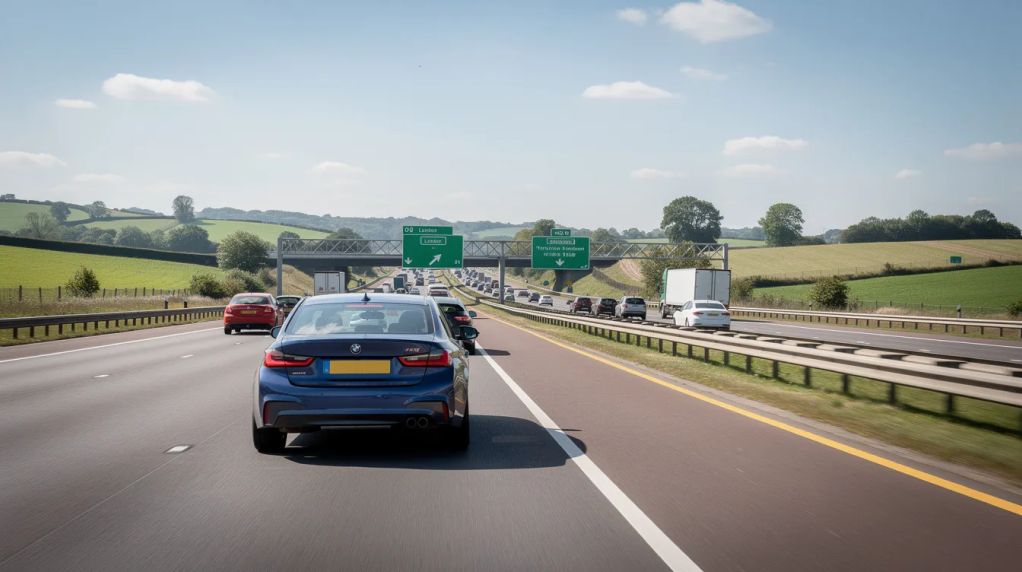
For vehicle expenses, you have two methods:
Simplified mileage method: You can claim 55p per mile for the first 10,000 business miles by car or van, then 25p per mile after that. Motorcycles are 24p per mile and bicycles 20p per mile (2025/26 rates - check HMRC for any changes). This covers fuel, vehicle insurance, wear and tear, and servicing in one flat rate.
Actual costs method: Track all vehicle costs - fuel, insurance, servicing, repairs, tyres - then claim only the business-use proportion based on a mileage log. This method can produce larger deductions for high-mileage users but demands more record-keeping.
Once you choose simplified expenses for a particular vehicle, HMRC expects you to keep using that method for that vehicle in later years. Keep a contemporaneous mileage log either way to support your mileage costs claims.
Working From Home: Claiming Home Office Costs
Many self employed people - especially freelancers and small design studios - work from home and can claim a proportion of household costs as business expenses. You can claim a portion of household costs if working from home, but only the share genuinely linked to your business use.
Household bills that can be apportioned:
- Heating and electricity
- Council tax
- Rent or mortgage interest (not capital repayments)
- Home insurance
- Broadband and landline (business share)
Under the actual costs method, you divide bills based on rooms and time. For example, if you have a four-room flat and one room is a dedicated home office used full-time, 25% of your utility bills and council tax might be a reasonable starting point. If you share the room or only work part-time, adjust downward.
Alternatively, HMRC's simplified flat-rate home working expenses let you claim £10, £18, or £26 per month depending on whether you work 25–50, 51–100, or 101+ hours from home each month. These avoid complex calculations but often produce a lower deduction than actual expenses for heavy home workers. Note: the flat rates do not cover phone or broadband - claim those separately based on your business portion.
Avoid claiming 100% of home costs or declaring a room as exclusively business if it doubles as a spare bedroom. Overclaiming invites HMRC scrutiny and can trigger Capital Gains Tax complications when you sell your property.
Can I Claim Council Tax, Rent and Utilities as a Sole Trader?
You cannot usually claim your entire council tax, rent, or utility bills. But you can claim a reasonable business-use proportion when you work from home.
Worked example: You live in a four-room flat and use one room as a dedicated workspace. A starting calculation might allocate 25% of council tax and electricity as home office costs. If you only work from that room four days a week, you'd adjust further - perhaps claiming around 20%.
If you rent separate business premises - a workshop, studio, or shared maker space - the full business premises rent, business rates, utility bills, and buildings insurance are generally allowable. These are straightforward because they're wholly for business.
Purely personal home improvements, garden landscaping, or household contents insurance for non-business items cannot be claimed. Keep a simple note of your apportionment method (rooms used, hours worked, square footage) to justify your household costs claims if HMRC ever asks.
Staff Costs, Freelancers and Subcontractors
If you pay other people to help run your business, many of those staff costs are allowable expenses that reduce your taxable profit.
Typical allowable staff costs:
- Employee wages, including salaries, overtime, and bonuses
- Employer contributions such as Employer National Insurance and pension payments
- Statutory payments you fund, like statutory sick pay
- Payments to freelancers and subcontractors, for example, specialist CAD modellers, machinists, and finishing contractors
- Recruitment expenses including job adverts and agency fees
- Staff training costs related to current roles
Subcontractor fees for hiring additional help can be considered allowable expenses - for instance, bringing in a specialist to handle CNC machining or surface finishing on a prototype run. The key test remains: the work must be genuinely for your business.
Personal domestic staff (cleaners, childcare) are not allowable unless clearly tied to a genuine business requirement. Tread carefully here and seek professional advice if unsure.
Bank Charges, Interest and Financial Costs
Many financial costs are deductible including interest on business loans and bank fees, provided they relate to your business rather than personal finances.
Allowable financial costs include:
- Monthly fees on a business bank account
- Transaction and merchant service fees for card payments
- Bank charges and overdraft fees
- Interest on business loans, business credit cards, and hire-purchase for business equipment
The repayment of actual borrowed capital is not an expense - only the interest portion qualifies. You also cannot claim interest or charges on purely personal borrowing, such as a personal credit card used for holidays.
Keeping a separate business bank account makes it far simpler to evidence your bank charges and other business related costs. It also helps when HMRC requests bank statements during an enquiry.
Business Insurance, Professional Fees and Subscriptions
HMRC treats many protective and professional costs as allowable expenses because they're necessary to operate legally and safely. Business insurance premiums are generally deductible as allowable expenses.
Allowable insurance policies:
- Professional indemnity insurance
- Public liability and product liability insurance
- Employers' liability insurance
- Property insurance security for rented premises or equipment
- Vehicle insurance (business-use share if mixed)
Professional fees you can claim:
- Accountant fees and tax adviser charges
- Legal fees and legal costs for business contracts, debt recovery, or IP protection
- Surveyor or architect fees related to business premises
You can usually claim membership fees to HMRC-approved professional bodies and trade associations, plus subscriptions to professional journals trade body publications relevant to your current work.
Gym memberships, political party fees, and social club dues are not allowable, even if networking occasionally happens there.
Marketing, Website and Client-Facing Costs
Genuine marketing and advertising spend is normally fully allowable and can be an effective way to reduce your tax bill while growing your business. Marketing and advertising costs are allowable business expenses.
Common allowable expenses in this category:
- Google Ads, social media advertising, and other online campaigns
- Printed flyers, signage, and exhibition stand fees
- Branded packaging and leaflets
- Website costs: domain registration, design, hosting, ecommerce platform fees, and SEO tools
However, you cannot claim for client entertainment or gifts. Meals, drinks, and hospitality tickets for clients are disallowed for income tax purposes, even when the purpose is clearly to win work.
Modest free samples or demo units given to prospective clients can usually be treated as marketing expenses rather than personal gifts, provided they're consistent and reasonable in value.
Materials, Stock and Production Costs
For many trades and creative businesses, the biggest self employed expenses are the materials and direct costs of making what you sell.
Examples of allowable materials and production costs:
- Raw materials: resins, polymers, metals, filament, powders, fasteners
- Packaging materials and shipping supplies
- Consumables: adhesives, sanding paper, cutting tools, cleaning solvents, calibration items
- Cost of goods bought for resale, including import duties and delivery charges
- Subcontracted manufacturing: finishing, painting, polishing

Stock and material costs should be matched to the tax year. Closing stock at year-end must be valued correctly so you don't double-claim the same materials across multiple years. If you run prototype batches with scrap or failed prints, those wasted materials are still legitimate consumables - record them separately.
Training, Professional Development and Research
Training costs for current business skills may be deductible, but not for new skill areas entirely unrelated to your existing trade. HMRC draws a clear line here.
Allowable training examples:
- CPD courses for qualifications you already hold
- Software masterclasses for tools you use in your business (e.g. advanced CAD training)
- Health and safety training required for your work
- Technical conferences directly linked to your current field
Courses that qualify you for a completely new profession - say, retraining from product designer to chartered surveyor - are generally not allowable as self employed expenses.
Subscriptions to technical libraries, standards databases, or research journals that directly support current projects are also claimable. Keep course outlines and receipts to demonstrate the link between training and your existing business activities.
Capital Allowances vs Day-to-Day Allowable Expenses
Both capital allowances and day-to-day allowable expenses reduce your taxable income, but they work differently. Normal allowable expenses cover routine business costs. Capital allowances apply to long-life assets you buy for the business.
Under traditional accounting, big purchases - machinery, high-end workstations, specialised equipment, vehicles - are capital assets. You claim capital allowances on them over time rather than deducting the full cost immediately. To claim capital allowances, you categorise assets into the correct pool and apply the relevant writing-down percentage or first-year relief.
The annual investment allowance lets many small businesses deduct the full cost of qualifying plant and machinery in the year of purchase, up to the current AIA limit. This is particularly relevant if you're investing in workshop equipment or high-value hardware.
Under cash basis accounting, most capital items (except cars) can often be claimed as straightforward expenses in the year you pay for them. This simplifies records considerably but isn't always available or beneficial for every business. Decide early whether you use cash basis or traditional accounting. The choice changes how you treat big purchases on your tax return and affects your actual profit calculation.
Expenses You Cannot Claim as a Self Employed Person
Claiming non-allowable items can lead to HMRC queries, disallowed claims, interest, and penalties. Here are the main things you cannot claim:
- Everyday clothing - even if you only wear it for work. Specialist protective clothing or uniforms may be claimed as allowable expenses, but a standard suit or smart outfit is not
- Personal spending - personal rent, personal household bills, leisure activities, family holidays (even with a bit of "business research" mixed in)
- Client entertainment - meals, drinks, hospitality for clients or prospective clients
- Fines and penalties - parking tickets, speeding fines, HMRC late-filing penalties
- Capital repayments - on personal or business loans (only interest is allowable)
- Drawings - money you take from the business for personal use is not an expense; it's how you pay yourself out of profit as a sole trader
Apply the "wholly and exclusively" test: if there's a clear personal benefit with no realistic way to separate it, the cost is usually not claimable. When in doubt, leave it out or get professional advice.
How to Claim Expenses on Your Self Assessment Tax Return
Claiming expenses happens as part of the annual Self Assessment process. You don't send receipts to HMRC, but you must keep them. Record-keeping including receipts and invoices is critical for supporting expense claims.
The basic process:
- Keep records of all business-related expenses for tax purposes throughout the year
- Total each expense category at year-end
- Enter figures into the self employment pages (SA103) of your assessment tax return
- Submit online by 31 January following the end of the tax year
You choose between cash basis accounting and traditional accounting on your return. Cash basis records income when received and expenses when paid. Traditional accounting uses invoicing dates and accruals. This choice affects how you time income and expense recognition and how you treat capital items.
If you make a mistake, you normally have up to 12 months after the filing deadline to amend your return. In some cases, you can claim a tax refund for overpayments going back further.
Accurate expense claims also affect your payments on account - the advance tax payments HMRC calculates based on the previous year's liability. Claiming legitimate costs keeps those advance payments realistic.
Record Keeping, Evidence and HMRC Compliance
Accurate records are the foundation of safe expense claims. You must keep records for at least five years after the tax return deadline - so for your 2025/26 return (filed by January 2027), records should be kept until at least January 2032.
What to keep:
- Receipts and invoices for all purchases
- Bank statements showing business transactions
- Mileage logs with dates, destinations, and business purpose
- Notes showing how you calculated apportionments for mixed-use costs
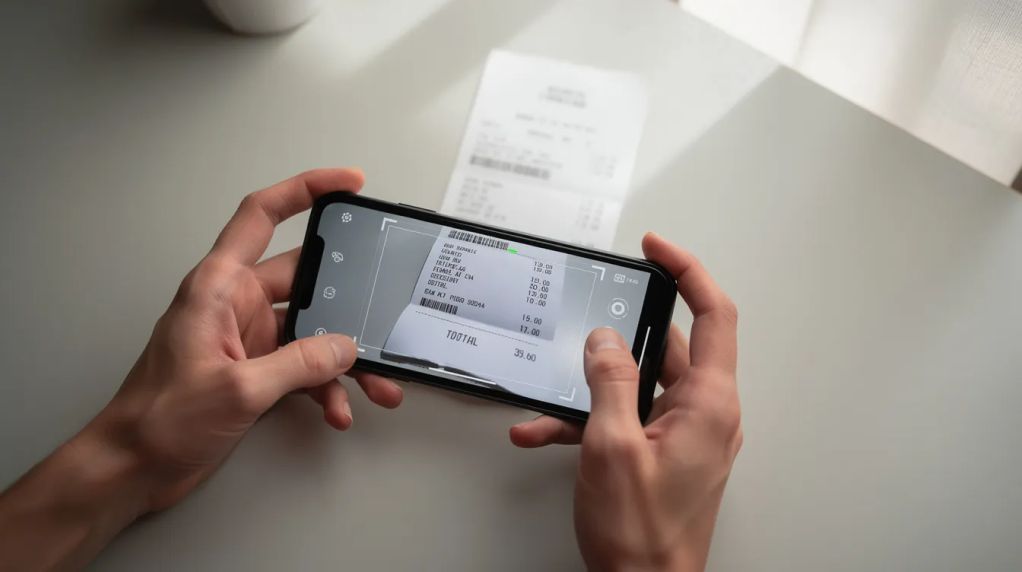
Digital tools make this easier: scan receipts into cloud storage, use bookkeeping apps, and separate business and personal banking. Recording how you calculated your business portion of home bills or phone use is just as important as keeping the bill itself.
Good records don't just protect you in an HMRC enquiry - they give you clearer insight into the real profitability and cash flow of your business. With Making Tax Digital for Income Tax arriving from April 2026 for those earning over £50,000, digital record-keeping is becoming a requirement rather than a nice-to-have.
Trading Allowance vs Claiming Actual Expenses
The £1,000 trading allowance is a relief for casual and low-level self employed income. The trading allowance simplifies tax reporting for low earners - if your gross trading income is £1,000 or less, you can treat it as tax-free and may not need to register for Self Assessment.
If your income exceeds £1,000, you have a choice: deduct the £1,000 flat-rate trading allowance instead of itemised expenses, or claim your actual allowable expenses. You cannot claim expenses if using the trading allowance - it's one or the other for the same trade.
Quick comparison:
| Scenario | Gross Income | Actual Expenses | Trading Allowance | Better Option |
|---|---|---|---|---|
| Low costs | £3,000 | £300 | £1,000 | Trading allowance |
| High costs | £3,000 | £3,000 | £1,000 | Actual expenses |
Expenses under £1,000 may qualify for a flat-rate trading allowance instead of itemization. But if you have material ongoing costs - rent, tools, software, travel - calculate whether detailed expense claims produce a lower taxable profit than the flat £1,000 deduction. For most established sole traders, itemising wins.
Note: you cannot use the trading allowance and also claim capital allowances for the same business income in the same year.
Common Mistakes When Claiming Self Employed Expenses
Many sole traders underclaim or misclaim because they misunderstand the rules or lose paperwork. Industry estimates suggest self employed people miss 20–30% of legitimate deductions through poor record keeping alone.
Common errors to watch for:
- Forgetting small recurring subscriptions (cloud tools, domain renewals, professional memberships)
- Underclaiming home office costs by not calculating room and time apportionments
- Claiming full mobile phone bills despite heavy personal use - only the business portion is tax deductible
- Treating ordinary personal clothing as if it were a protective uniform
- Claiming commuting costs as business travel
- Using both mileage and actual fuel/maintenance for the same vehicle in the same year
- Overlooking bank charges, payment processing fees, and small marketing spends like low-cost social media ads
- Not valuing closing stock correctly, leading to double-counted material costs
Before you submit your return, run through an annual review against the categories in this article. A simple checklist catches missed or incorrect claims and could save you hundreds - or prevent HMRC problems.
FAQs: Self Employed Allowable Expenses in the UK
Do I need receipts for every expense I claim?
HMRC expects you to keep evidence for all material expenses - receipts, invoices, bank statements, or digital records. You don't send them with your Self Assessment unless HMRC specifically asks, but you must be able to produce them if queried. For very small cash purchases where a receipt isn't available, a contemporaneous written note (date, amount, what it was for) can help, but relying heavily on unreceipted items is risky. Keep records for at least five years after the 31 January deadline for the relevant tax year.
Can I claim a laptop or specialist equipment as an expense?
A laptop or high-value piece of business equipment used mainly for business is usually claimable. Under cash basis accounting, it's often treated as a straightforward expense in the year you pay for it. Under traditional accounting, it typically goes through capital allowances. If there's significant personal use, only a reasonable business-use proportion should be claimed. Keep the purchase invoice and a simple note of usage split (e.g. 80% business, 20% personal).
Are my National Insurance contributions an allowable expense?
Class 2 and Class 4 national insurance contributions for self employed people are calculated within the tax system and are not claimed as business expenses on the self employment pages. However, employer National Insurance paid on staff wages - if you employ people - is an allowable staff cost. Don't add your personal NI to your expense totals, as relief is already built into the way self employed NI rates are applied.
Can I claim expenses if I make a loss in my first year?
Yes. You can still claim allowable expenses even if they exceed your income, creating a trading loss. Losses can sometimes be carried forward to offset against future profits or, in some circumstances, set against other income in the same or previous year. This area can be complex, so professional advice is sensible. Keeping full records from day one ensures you don't lose out on tax relief when your business becomes profitable.
How will Making Tax Digital change how I claim expenses?
From April 2026, sole traders with qualifying business income over £50,000 need to keep digital records and send quarterly updates to HMRC under Making Tax Digital for Income Tax. The threshold drops to £30,000 from April 2027 and £20,000 from April 2028. The underlying rules on which other business expenses are allowable do not change - only the way they are recorded and reported becomes more frequent and more digital. Start using digital bookkeeping tools now so the transition to quarterly reporting is smoother when MTD becomes mandatory for your income level.